
Deal readiness
Deal readiness is how prepared the company is for a buyer's diligence: an indexed data room on day one, contracts assignable on a change of control, licenses and IP in order, and a story the numbers support. With those in place, nothing surfaces in diligence that was not already disclosed.
The film
What diligence tests
The six elements a buyer reads in diligence, from the Data Room and Legal and Compliance to Succession, how enterprise value is priced, and what to build before going to market.
What buyers measure
- An indexed data room on day one
- Contracts assignable on a change of control
- Licenses, filings, and intellectual property in order
- A story the numbers support
What good looks like
- Data room built before the market process starts
- Every material contract reviewed by counsel
- No surprises in legal, tax, or compliance
- A succession plan on paper, with names
Where owners fall short
- Contracts that die at a change of control
- Documents scattered across inboxes
- Unresolved disputes or filings
- A story the numbers do not support
The numbers that move it
How is deal readiness measured?
Deal readiness moves with four numbers: how complete the data room is against the diligence checklist, the share of material contracts that can be assigned, open legal items, and how fast a diligence request is answered.
Data room completeness
Against the diligence checklist
Contracts assignable
Of material contracts
Open legal items
Count
Time to answer a request
Diligence response time
The elements behind it
Which elements make up deal readiness?
Deal readiness is scored from six of the 36 elements in the FNDRS Elements™ framework: the data room, legal and compliance, tech debt, succession, enterprise value, and optionality. Each opens its own entry.
All 36 elements- Dr27 · Data RoomDiligence documents assembled and indexed before a buyer asks.
- Lc23 · Legal & ComplianceContracts, licenses, and filings in order and enforceable.
- Td24 · Tech DebtAging systems, custom code, and unsupported tools a buyer would have to replace. Scored as control: higher is safer.
- Sc28 · SuccessionA named, tested plan for who leads after the owner.
- Ev33 · Enterprise ValueWhat the market will pay for the company as a whole.
- Op34 · OptionalityThe freedom to sell, hold, or hand off on the owner’s terms.
 1:49
Whiteboard session
Nick on enterprise value
Nick works through this element as in an FNDRS workshop: what a buyer is really asking, how the score moves, and the first thing to fix.
Nick LongCEO and co-founder

How FNDRS moves it
Advised, tracked, and re-scored
The M&A desk reads the business the way a buyer will, then the data room, contracts, and story are built before anything goes to market.
- In the processPreparation in the M&A process
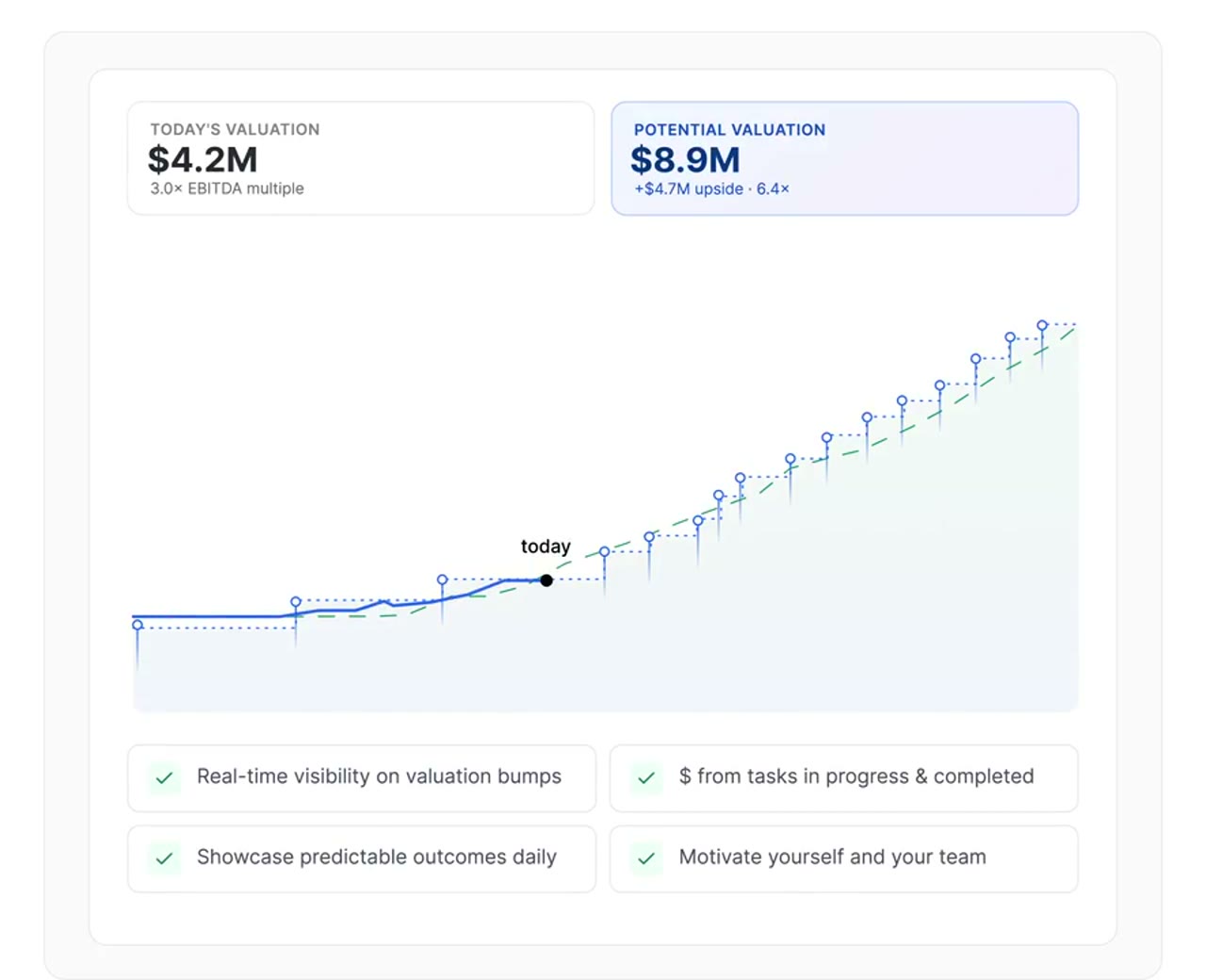
- In the platformReal-time valuation
- ToolsGet your exit scoreThe M&A process
Questions
Owners ask
Before the first buyer conversation, not after the letter of intent. Building it early also finds the problems while there is still time to fix them quietly.
A contract term that lets the other party end or renegotiate the agreement when the company is sold. Buyers look for them in your best customer and supplier contracts, so they should be found and addressed first.
Where do you stand on deal readiness?
The exit-readiness score gives this pillar a mark from zero to one hundred and the three gaps worth closing first.